Peer-Reviewed Case Studies

Representative Research Experience

Real computational projects demonstrating the integration of artificial intelligence, biophysical molecular modeling, and multi-omics biological interpretation.

Representative Research Experience Notice

The following project highlights demonstrate the computational biology expertise of our team members developed through rigorous scientific research. Experimental validation was performed by collaborating researchers or partner organizations where applicable. ProGen specializes in delivering robust in silico analysis, biophysical modeling, and decision-support dossiers.

Structure-Based Drug Discovery • Antiviral Therapeutics

AI-Driven Discovery of Novel RdRp Inhibitors for Dengue Virus

Scientific Challenge

Dengue virus remains a major global health threat with limited antiviral treatment options. RNA-dependent RNA polymerase (RdRp) is a highly conserved enzyme essential for viral replication and represents a prime therapeutic target.

Computational Contribution

  • Target Structure Characterization: High-resolution modeling of the RdRp catalytic pocket and allosteric sites.
  • High-Throughput Virtual Screening: Screening extensive chemical libraries coupled with RDKit chemical similarity searches.
  • Molecular Dynamics & MM/GBSA: 100ns explicit-solvent simulations to evaluate trajectory stability and calculate binding free energies.

Key Scientific Findings

  • Prioritized promising lead compounds from multi-million chemical libraries.
  • Demonstrated that interaction stability and binding energetics (MM/GBSA) are more reliable indicators of antiviral potential than docking scores alone.
  • Identified promising lead scaffolds for further experimental optimization.
  • Computationally prioritized candidates were subsequently selected for enzymatic validation through collaborative research.
Scientific Significance: Demonstrates how combining virtual screening and molecular dynamics energetics drastically reduces false positives in antiviral discovery.
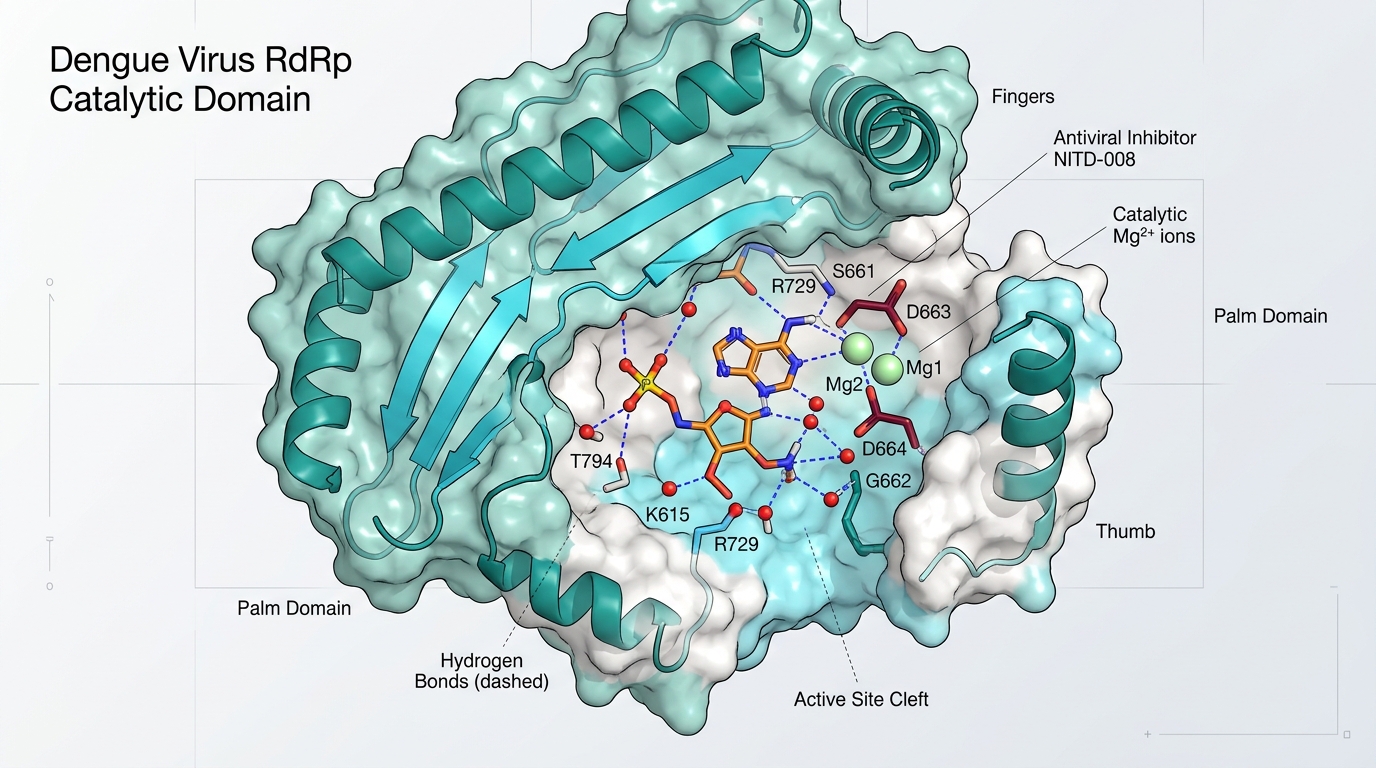
Dengue Virus RdRp catalytic site, bound inhibitor ligand, and binding free energy ranking
Figure 1: Dengue RdRp target structure, molecular docking, and binding free energy (MM/GBSA) ranking.
AI-Based Drug Discovery • Cardiovascular & Metabolic Target

Machine-Learning-Guided Identification of CETP Inhibitors

Scientific Challenge

Cholesteryl Ester Transfer Protein (CETP) plays an important role in lipid metabolism and has emerged as a potential therapeutic target in cardiovascular disorders. Understanding the molecular mechanism of CETP inhibition is essential for rational development of effective therapeutic candidates.

Computational Contribution

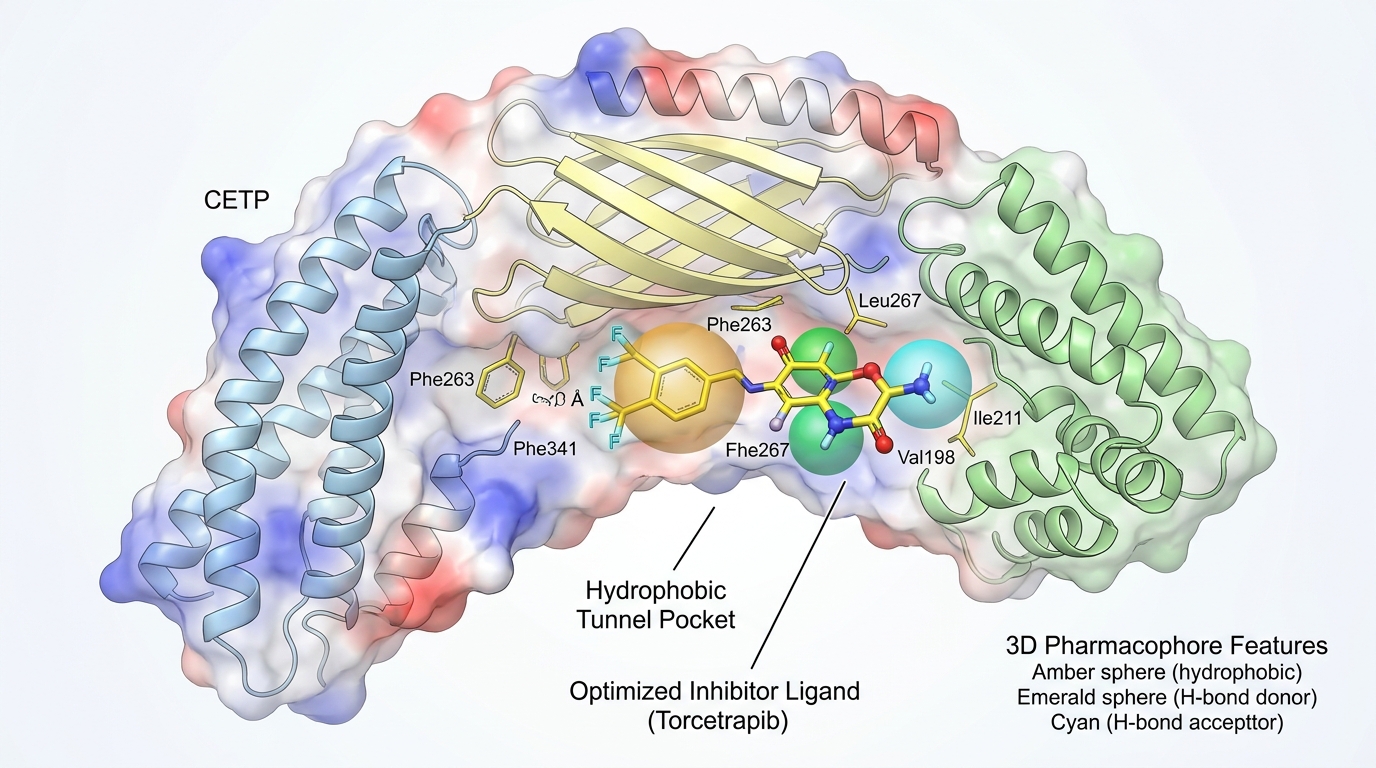
  • AI & Data-Driven Discovery: Trained high-accuracy machine learning predictive models (Prediction Score: 0.87) combined with pharmacophore mapping and fingerprint analysis.
  • Structural Validation: Full protein modeling, docking, and 100ns molecular dynamics simulations to track ligand stabilization.
  • Tunnel Region Analysis: Mapped hydrophobic interactions and hydrogen-bonding networks inside the CETP tunnel pocket.

Key Scientific Findings

  • Integrated machine learning and pharmacophore approaches to identify potential CETP inhibitors.
  • Evaluated experimentally characterized CETP variants using molecular modeling and simulation approaches.
  • Identified key residues contributing to ligand stabilization and inhibition mechanism.
  • Prioritized promising compounds showing sustained interactions within the CETP tunnel region.
Scientific Significance: Highlights an integrated AI and computational framework for discovering and optimizing candidates by combining predictive modeling with biophysical mechanistic insights.
CETP pharmacophore model, tunnel binding site, and 100ns MD trajectory
Figure 2: CETP protein structure, pharmacophore model, bound inhibitor in tunnel region, and 100ns MD energy profile.
AI/ML & Immunoinformatics • Precision Oncology

Machine-Learning Framework for Neoantigen Prediction

Scientific Challenge

Neoantigens derived from tumor-specific mutations represent promising targets for personalized cancer immunotherapy. Accurate identification of immunogenic candidates requires integration of antigen processing, presentation, and molecular recognition information.

Computational Contribution

  • Data Preparation: Mutation-derived peptide analysis and sequence-based feature extraction.
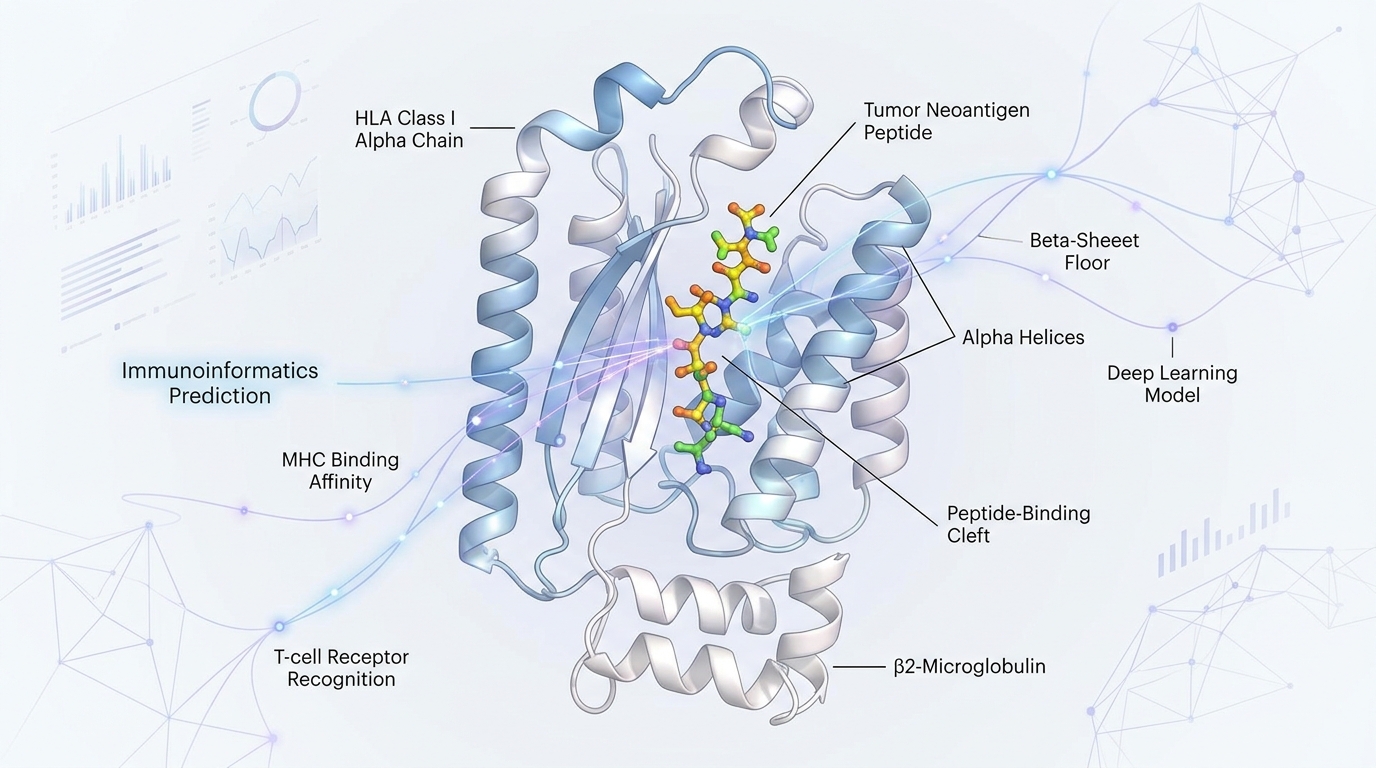
  • Deep Learning Prediction: Neural network models evaluating proteasomal cleavage, TAP transport, and MHC presentation affinity.
  • Structural Validation: High-precision Peptide-MHC modeling, molecular docking, and 200ns molecular dynamics simulations to quantify complex stability.

Key Scientific Findings

  • Developed an integrated computational framework for neoantigen prioritization.
  • Incorporated antigen processing characteristics including proteasomal cleavage considerations.
  • Combined machine learning predictions with structural validation approaches.
  • Evaluated molecular stability and interaction patterns using computational structural biology.
Scientific Significance: Connects cancer genomics and precision medicine by validating immunogenic epitopes through biophysical stability assessments.
AI-driven neoantigen discovery workflow: DNA mutation to deep learning, peptide-MHC complex, and 200ns MD simulation
Figure 3: Multi-step neoantigen workflow connecting genomic variants to peptide-MHC biophysical stability.
Cancer Genomics & Proteomics • Dual-Target Molecular Modeling

Computational Investigation of Dual EZH2–EGFR Inhibition in Triple-Negative Breast Cancer

Scientific Challenge

Triple-negative breast cancer (TNBC) represents a major therapeutic challenge due to limited targeted treatment options and aggressive recurrence. Integrated analysis of disease-associated pathways and molecular targets can support the development of improved therapeutic strategies.

Computational Contribution

  • Genomic Analysis: TCGA patient cohort gene expression profiling and Kaplan-Meier overall survival correlation for EZH2 and EGFR co-expression.
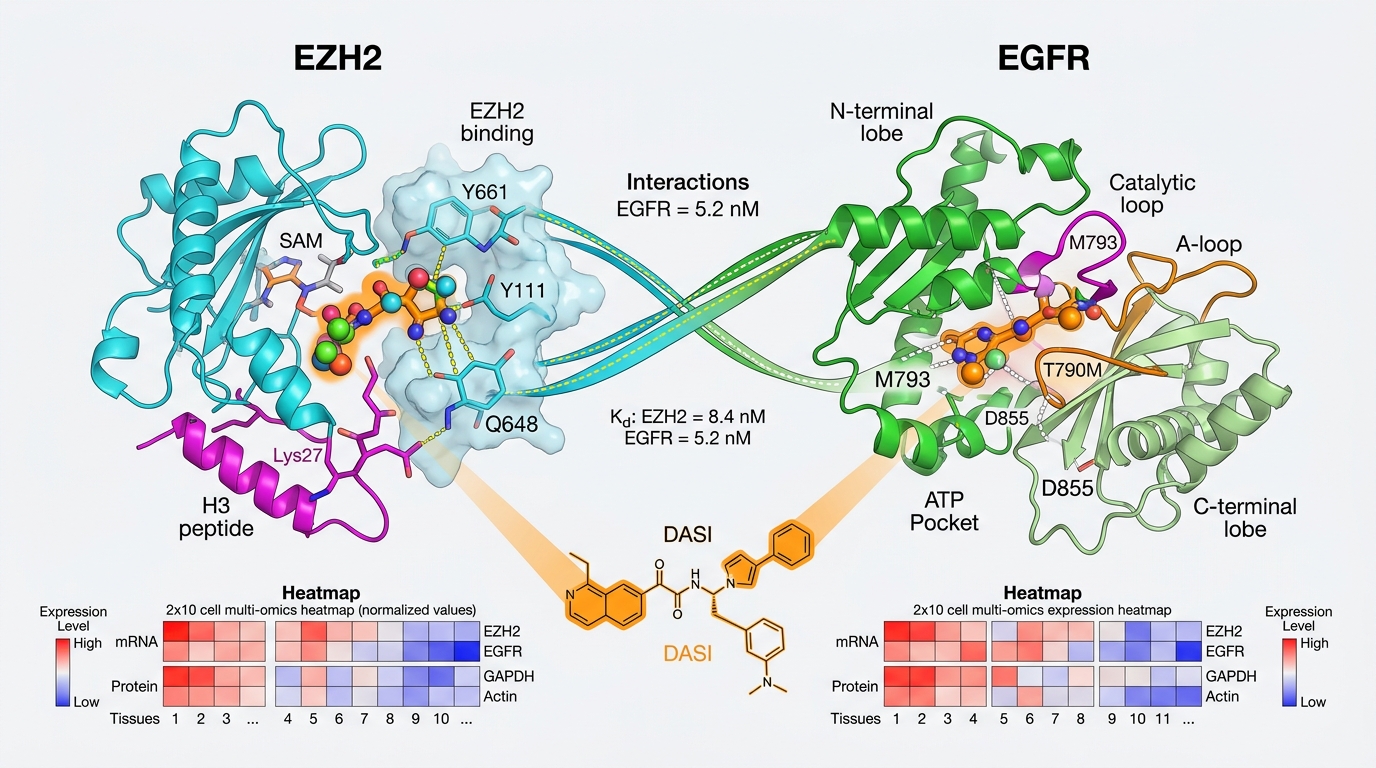
  • Dual-Target Structural Modeling: Docking and all-atom MD simulations against both EZH2 (residues TYR661, ASP664, TYR677) and EGFR (residues MET793, LYS745, THR790) binding pockets.
  • Proteomic Interpretation: Differential protein expression mapping, functional enrichment, and cell cycle/DNA repair pathway modulation.

Key Scientific Findings

  • Identified the association of EZH2 and EGFR expression patterns with TNBC disease outcomes.
  • Supported rational design and characterization of a dual-target therapeutic strategy.
  • Computational analyses provided insights into molecular interactions and stability of the designed inhibitor.
  • Proteomic analysis revealed biological pathways associated with therapeutic response.
Scientific Significance: Demonstrates the power of multi-omics integration and dual-target structural modeling to de-risk next-generation oncology therapeutics.
TCGA expression heatmap, Kaplan-Meier survival curves, dual target concept, and protein-ligand interactions for EZH2 and EGFR
Figure 4: TCGA survival analysis, dual-target binding mechanism, and proteomic pathway network in TNBC.
Target Collaboration

Interested in In Silico Support for Your Target?

Whether investigating viral enzymes, oncogenic kinases, or novel neoantigens, ProGen provides customized computational pipelines and publication-grade reports.